

If you are asking how long pole painting lasts, you are really asking how long until you have to pay for this again.
The honest answer is that lifespan is driven more by prep and environment than by brand names on a label.
The three biggest factors that determine lifespan
1. Surface preparation
If corrosion is not addressed and failing paint is not removed, the new coating is being applied to a weak foundation. That shortens lifespan fast.
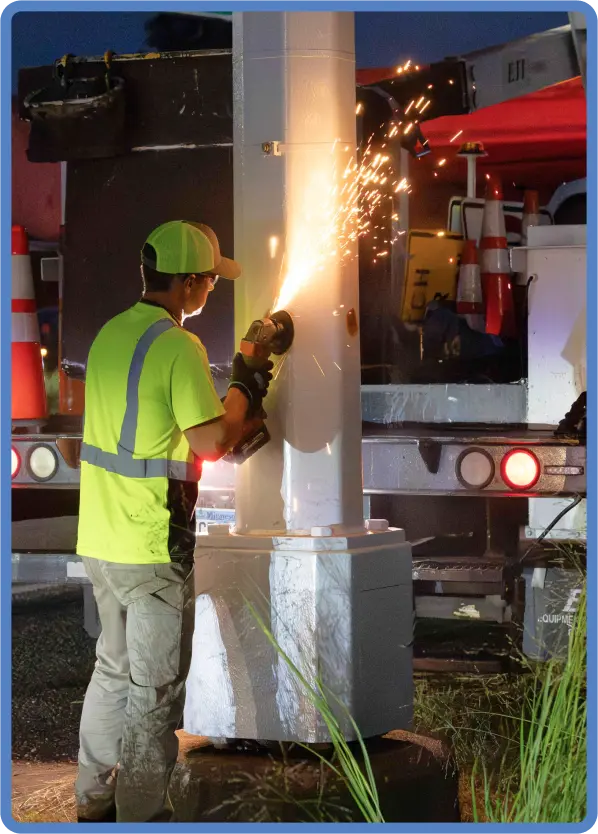
Good prep includes cleaning, removing loose coating, treating rust, and properly feathering edges so coatings bond.
2. The coating system
A correct system means the primer and topcoat match the substrate and exposure conditions. If the system is wrong, failure shows up early at seams, bases, and edges.
The right system depends on whether the pole is galvanized, steel, aluminum, or previously coated and what exposure it sees.
3. The environment and abuse
Paint lives shorter in harsh conditions:
-
Road salt and deicing chemicals
-
Irrigation overspray
-
Constant UV exposure
-
Coastal or high humidity environments
-
Lawn equipment impact at the base
Where failures usually start
Most pole failures start at the base. Water sits there, salt splashes there, and impacts happen there. If you want longer life, the base treatment and coating build must be taken seriously.
How to extend the life of a pole painting project
-
Standardize an inspection cycle
-
Touch up chips before rust spreads
-
Keep irrigation aimed away from poles
-
Wash salt residue in spring where relevant
-
Repaint on a cycle before corrosion becomes structural
Bottom line
Pole painting lasts longest when prep is done correctly, the coating system matches the substrate, and the site is maintained like an asset program rather than a reactive repair.
Internal links to add:
-
Pole Painting category page
-
Property Management service page
-
Government and Municipal service page
-
Contact page